
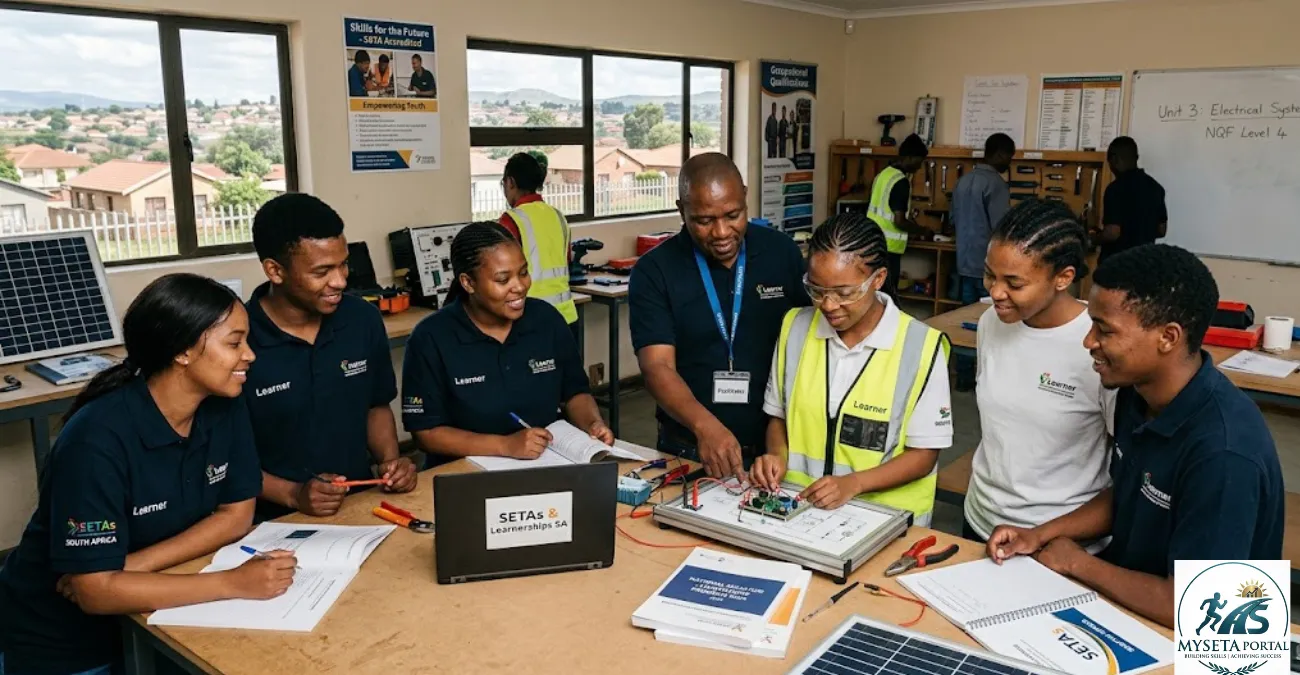
A learnership in South Africa is a structured skills development programme that combines theory, workplace training, and assessment to produce a nationally recognised qualification.
Most learnerships last between 12 and 24 months, depending on the qualification level and industry requirements.
Because learnerships are registered on the National Qualifications Framework (NQF), their duration is carefully designed to ensure learners gain both knowledge and real workplace experience.
Standard Learnership Duration in South Africa
Most SETA-based learnerships run for:
- 12 months (1 year) – entry-level programmes
- 18 months (1.5 years) – TVET and structured workplace programmes
- 24 months (2 years) – technical and artisan programmes
This is consistent across multiple Sector Education and Training Authorities (SETAs) such as:
- SASSETA (security)
- MICT SETA (IT)
- MQA (mining)
- Services SETA
As confirmed by industry guidance, most learnerships fall within the 12–24 month range depending on NQF level and complexity .
Why Learnership Duration Is Not the Same for Everyone
Learnerships are not time-based courses — they are competency-based qualifications, meaning duration depends on:
- NQF level of the qualification
- Number of credits required
- Industry complexity
- Workplace exposure needed
- Assessment requirements
Higher-level qualifications require more training hours, workplace tasks, and assessments before certification.
Learnership Duration by Level (Simple Breakdown)
NQF Level 1–3 (Basic Entry Level)
Usually 6–12 months
- Security learnerships
- Retail training
- Basic admin roles
- Entry-level customer service
Best for Matric or Grade 11 job seekers.
NQF Level 4 (Most Common Learnership Level)
Usually 12 months
- Business administration
- Office work
- Call centres
- Retail management support
This is the most common structure for unemployed youth programmes.
NQF Level 5–6 (Intermediate / TVET Level)
18–24 months
- N6 Work Integrated Learning (WIL)
- Business management
- HR and finance programmes
- IT and technical support
Often used for TVET college graduates.
Artisan / Technical Learnerships
18–24+ months
- Engineering (electrical, mechanical)
- Mining (MQA programmes)
- Apprenticeship-style training
These require more practical workplace time and trade preparation.
What Happens During a Learnership?
A learnership is divided into three key phases:
1. Theory Training
- Classroom or online learning
- Assignments and assessments
- Industry knowledge building
2. Workplace Experience
- Practical job training
- Supervised tasks
- Real company exposure
3. Portfolio of Evidence (POE)
- Work evidence collection
- Final assessments
- Competency evaluation
All three must be completed before certification is awarded.
Do Learnerships Pay During the Programme?
Yes. Most learnerships include a monthly stipend, not a salary.
- Paid monthly during the active programme
- Amount depends on SETA and employer
- Designed to support transport and basic needs
Can a Learnership Be Shortened or Extended?
Extensions may happen if:
- Illness or emergencies occur
- Workplace placement is delayed
- Assessments are incomplete
Shortening is rare but possible if:
- You already have prior learning (RPL)
- You complete assessments faster than expected
However, most learners complete the full structured duration.
Related Opportunity
You may also explore
What Happens After Completing a Learnership?
After finishing, you receive:
- A nationally recognised qualification
- Proof of workplace experience
- Completed portfolio of evidence
You can then:
- Apply for jobs
- Continue studying
- Enter internships or apprenticeships
- Improve your CV for better opportunities
Learnerships improve employability, but do not always guarantee permanent employment.
Frequently Asked Questions (FAQ)
What is the shortest learnership in South Africa?
Most start from 12 months, but some skills programmes can be shorter.
Can a learnership last 3 years?
Rarely. Only very technical or multi-stage artisan programmes may extend beyond 24 months.
Do all learnerships pay?
Yes, most provide a stipend, but the amount varies.
Is a learnership better than studying?
It depends:
- Learnership = work experience + qualification
- Study = theory-based qualification
Many learners benefit from doing both over time.
Expert Insight (E-E-A-T – Martine Smith)
Martine Smith, Youth Skills Development Advisor, explains:
“The length of a learnership is designed to balance learning and workplace readiness. A shorter programme builds basic skills, while longer programmes develop technical or specialist competence.”
She advises learners to focus less on duration and more on:
- Completing all modules successfully
- Building real workplace experience
- Maintaining attendance and discipline
- Treating the programme like a job
Trust & Authority Notes (E-E-A-T Signals)
This guide is based on:
- SETA programme structures and NQF qualification frameworks
- South African learnership regulations and workplace training models
- Verified education and skills development standards in SA
- Industry-aligned career development practices
It is designed to provide clear, practical, and accurate guidance for South African youth entering learnership programmes.
Final Summary
A learnership in South Africa typically lasts:
- 12 months → entry-level jobs
- 18 months → TVET/WIL programmes
- 24 months → technical and artisan careers
The key goal is not the duration — but gaining skills, experience, and a recognised qualification that improves long-term employability.
Grow Your Career with MySETA Portal
Unlock real opportunities that help you move from learning to earning. MySETA Portal connects South African youth with trusted and up-to-date career development opportunities designed to build skills and open doors.
Whether you are a matriculant, unemployed graduate, or someone looking to upskill, this platform helps you stay ahead with opportunities that matter.
What you can access:
- Career Guides
- SETA Guides
- SETAs
- Bursaries
- Learnerships
- Internships
- Training Programmes
- TVET Opportunities
- Government Vacancies
- Courses
- Apprenticeships
Professional Disclaimer
Advice & Insights by Martine Smith, Founder and Managing Editor of MySETA Portal

MySETA Portal is an independent information platform and is not affiliated with any SETA, government department, or public institution.
While we strive to publish accurate and up-to-date information, readers should always verify opportunities, requirements, and deadlines through official SETA, DHET, employer, or government websites before applying.
The content published on MySETA Portal is provided for informational purposes only and should not be considered legal, financial, educational, or professional career advice. Readers are encouraged to seek qualified professional guidance where appropriate.

Martine Smith is the Founder and Managing Editor of MySETA Portal, he writes about SETA learnerships, internships, bursaries and youth employment opportunities in South Africa. His goal is to help young people access trusted career information and skills development programmes. Email: info@mysetaportal.co.za