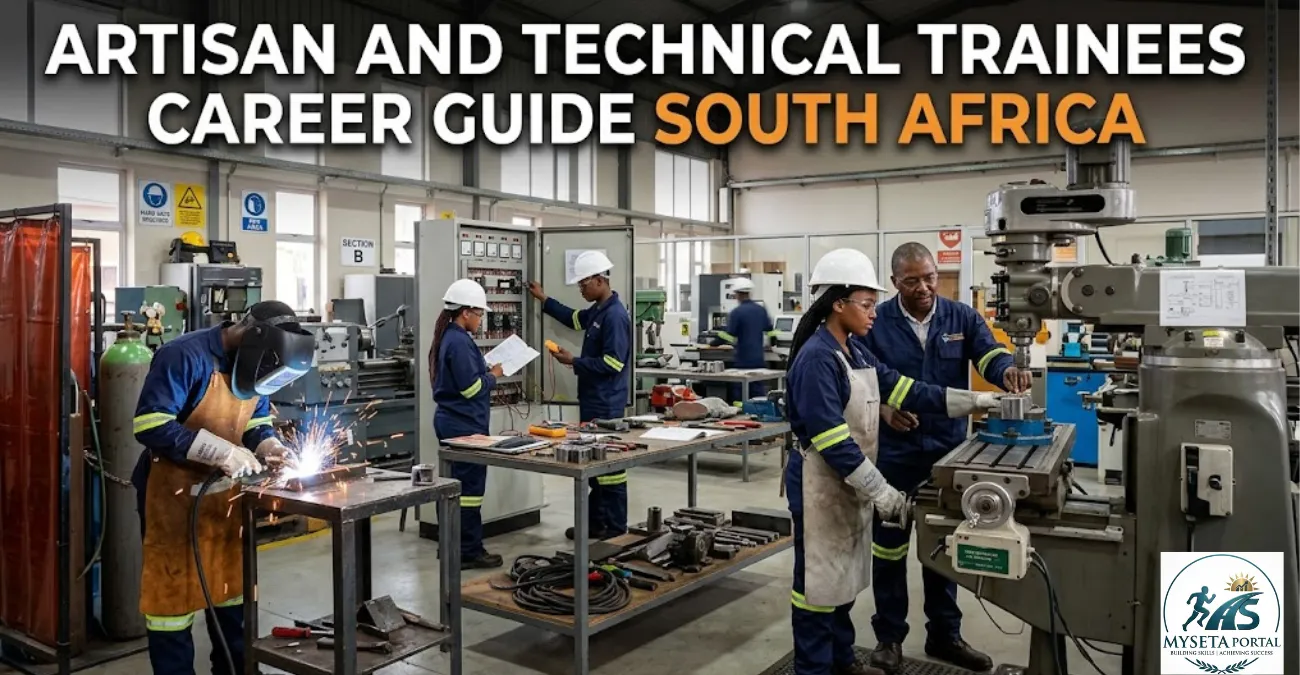
Artisan and technical careers remain among the most valuable and in-demand occupations in South Africa. Industries such as manufacturing, mining, energy, engineering, construction, transport, and telecommunications rely heavily on skilled artisans and technical professionals.
For young people and graduates interested in practical, hands-on careers, artisan and technical trainee programmes provide a direct pathway into employment while earning valuable workplace experience.
Who Are Artisan and Technical Trainees?
Artisan and technical trainees are individuals receiving structured training to develop practical skills in a specific trade or technical occupation.
These programmes combine:
Classroom learning
Practical training
Workplace experience
Trade-specific skills development
The goal is to prepare trainees for qualification as artisans, technicians, or technical specialists.
Popular Artisan Trades in South Africa
Electrical Artisan
Responsibilities include:
Electrical installations
Equipment maintenance
Fault finding
Industrial electrical systems
Millwright
Millwrights work with:
Mechanical equipment
Electrical systems
Automation technology
Industrial machinery
Fitter and Turner
Responsibilities include:
Manufacturing components
Machine maintenance
Equipment repairs
Precision engineering
Boilermaker
Boilermakers work on:
Metal fabrication
Welding
Structural steel construction
Industrial equipment
Diesel Mechanic
Diesel mechanics maintain:
Heavy-duty vehicles
Mining equipment
Construction machinery
Transport fleets
Instrumentation Technician
Technicians focus on:
Process control systems
Automation
Industrial instrumentation
Monitoring equipment
Technical Training Fields
Technical trainees may also enter fields such as:
Mechanical Engineering
Electrical Engineering
Civil Engineering
Renewable Energy
Telecommunications
Mechatronics
Automation
Information Technology
Manufacturing Technology
Benefits of Becoming an Artisan
Artisan careers offer several advantages:
High Demand
South Africa continues to experience shortages of qualified artisans in multiple industries.
Practical Skills
Training focuses on real workplace experience and hands-on learning.
Strong Earning Potential
Qualified artisans often earn competitive salaries due to specialised skills.
Career Mobility
Artisans can work across multiple industries and may even start their own businesses.
International Opportunities
Many artisan qualifications are recognised internationally, creating opportunities abroad.
With experience, many progress into supervisory, management, consulting, or entrepreneurial roles.
Why Artisan Careers Matter
South Africa’s economic growth depends heavily on skilled artisans and technical professionals. These occupations support infrastructure development, industrial production, energy generation, transportation systems, and technological innovation.
As industries continue modernising, the demand for technically skilled workers is expected to remain strong.
Frequently Asked Questions
Do artisan trainees get paid?
Many apprenticeships, learnerships, and trainee programmes provide stipends or salaries, depending on the employer and programme structure.
Do I need a university degree to become an artisan?
No. Many artisans qualify through TVET colleges, apprenticeships, occupational training, and trade testing.
How long does artisan training take?
Training periods vary depending on the trade but typically range from two to four years.
Are artisan careers in demand?
Yes. Skilled artisans remain among the most sought-after occupations in South Africa and many international labour markets.
Expert Guidance (E-E-A-T – Martine Smith)
Artisan and technical careers offer excellent opportunities for individuals who enjoy practical problem-solving and hands-on work. Many industries continue to experience skills shortages, making qualified artisans highly employable. Young people should consider technical careers as a valuable alternative to traditional academic pathways, particularly in sectors where demand for skilled trades remains strong.
Martine Smith Technical Careers, Learnerships and Skills Development Specialist
Grow Your Career with MySETA Portal
Unlock real opportunities that help you move from learning to earning. MySETA Portalconnects South African youth with trusted and up-to-date career development opportunities designed to build skills and open doors.
Whether you are a matriculant, unemployed graduate, or someone looking to upskill, this platform helps you stay ahead with opportunities that matter.
Advice & Insights by Martine Smith, Founder and Managing Editor of MySETA Portal
MySETA Portal is an independent information platform and is not affiliated with any SETA, government department, or public institution.
While we strive to publish accurate and up-to-date information, readers should always verify opportunities, requirements, and deadlines through official SETA, DHET, employer, or government websites before applying.
The content published on MySETA Portal is provided for informational purposes only and should not be considered legal, financial, educational, or professional career advice. Readers are encouraged to seek qualified professional guidance where appropriate.
Martine Smith is the Founder and Managing Editor of MySETA Portal, he writes about SETA learnerships, internships, bursaries and youth employment opportunities in South Africa. His goal is to help young people access trusted career information and skills development programmes. Email: info@mysetaportal.co.za