
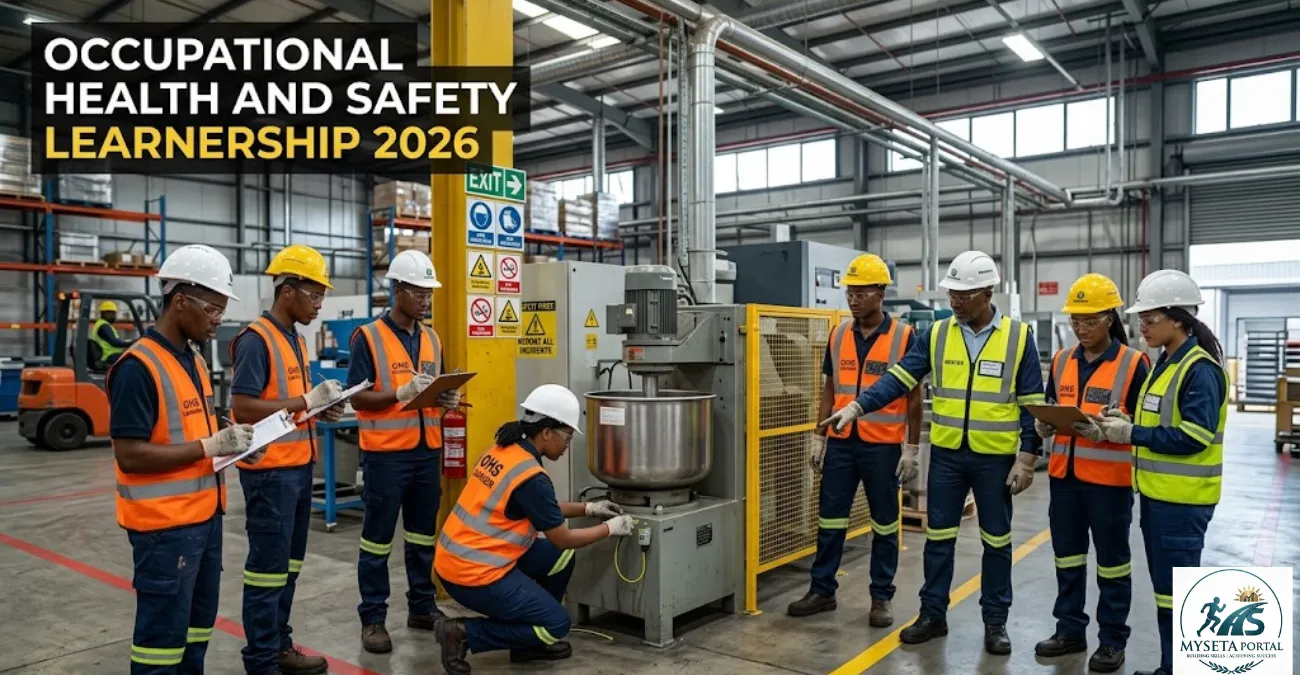
Young South Africans looking for a career that combines workplace safety, compliance and risk management can apply for the Occupational Health and Safety (OHS) Learnership 2026.
The programme offers practical workplace training, structured learning and a monthly stipend of R7,100, making it an attractive opportunity for unemployed youth seeking valuable work experience and nationally recognised skills.
Occupational Health and Safety professionals play an important role in protecting employees, ensuring compliance with workplace regulations and helping organisations create safer working environments.
What Is the Occupational Health and Safety Learnership 2026?
The Occupational Health and Safety Learnership is a structured skills development programme designed to equip learners with the knowledge and practical experience required to support workplace safety initiatives.
The programme combines:
- Classroom-based learning
- Practical workplace experience
- Safety compliance training
- Health and safety administration
- Risk management exposure
Participants gain both theoretical knowledge and hands-on experience in real workplace environments.
Programme Overview
| Programme Detail | Information |
|---|---|
| Programme | Occupational Health and Safety Learnership 2026 |
| Industry | Occupational Health and Safety |
| Monthly Stipend | R7,100 |
| Programme Type | Learnership |
| Duration | 12 Months |
| Minimum Qualification | Grade 12 |
| Age Requirement | 18–35 Years |
| Training Model | Theory and Workplace Experience |
| Employment Status | Unemployed Applicants Preferred |
What Does an Occupational Health and Safety Practitioner Do?
Health and Safety Practitioners help organisations maintain safe working environments.
Their responsibilities often include:
- Conducting workplace inspections
- Identifying safety hazards
- Monitoring compliance
- Assisting with safety audits
- Investigating incidents
- Maintaining safety records
- Supporting emergency preparedness
- Promoting workplace safety awareness
These functions are essential in industries such as manufacturing, construction, mining, logistics, healthcare and engineering.
Why Occupational Health and Safety Is a Growing Career Field
Workplace health and safety remains a legal requirement across South African industries.
As companies focus on reducing accidents and improving compliance, demand for qualified safety personnel continues to grow.
Many industries require health and safety support, including:
- Construction
- Manufacturing
- Mining
- Logistics
- Warehousing
- Engineering
- Energy
- Healthcare
- Government departments
This makes Occupational Health and Safety a career path with opportunities across multiple sectors.
Who Can Apply?
The learnership is aimed at unemployed South Africans who want to build a career in workplace safety and compliance.
Minimum Requirements
Applicants should:
- Be South African citizens
- Be between 18 and 35 years old
- Have Grade 12 (Matric)
- Be unemployed
- Have good communication skills
- Be willing to participate in workplace training
- Be able to work in a team environment
- Demonstrate attention to detail
Applicants with an interest in safety, compliance and workplace administration are encouraged to apply.
What Skills Will Learners Develop?
The programme focuses on both technical and professional skills.
Occupational Health and Safety Skills
Learners may gain exposure to:
- Workplace safety procedures
- Hazard identification
- Risk assessment principles
- Safety inspections
- Incident reporting
- Occupational health regulations
- Compliance monitoring
- Safety record keeping
Workplace Skills
Participants may also strengthen:
- Communication
- Teamwork
- Professional conduct
- Problem-solving
- Time management
- Report writing
- Administrative skills
- Attention to detail
These skills are valuable across many industries.
Why Workplace Safety Matters
Every organisation has a responsibility to provide a safe working environment.
Unsafe workplaces can lead to:
- Injuries
- Equipment damage
- Production losses
- Legal penalties
- Reduced productivity
Health and Safety Practitioners help prevent these issues by identifying risks and supporting compliance efforts.
This makes workplace safety one of the most important functions within any organisation.
Monthly Stipend
Successful learners will receive a monthly stipend of R7,100.
The stipend is intended to assist participants with costs related to programme participation.
Possible Expenses Covered
- Transport
- Communication costs
- Daily living expenses
- Internet connectivity
- Work-related expenses
While the stipend provides financial support, the practical workplace experience and industry exposure are often the most valuable long-term benefits.
Related Opportunity
You may also explore
- How to Apply for SETA Training in South Africa: A Complete Guide for Job Seekers
- How to Check Your SETA Application Status in South Africa (2026 Guide)
- From R2,000 to R8,000: What Most South Africans Don’t Know About SETA Monthly Stipends in 2026
- How to Register Your CV on SETA in South Africa (2026 Complete Guide)
Career Opportunities After Completion
Completing an Occupational Health and Safety Learnership can help learners pursue various career pathways.
Possible Career Opportunities
- Health and Safety Assistant
- Safety Administrator
- Compliance Assistant
- Safety Officer Trainee
- SHEQ Assistant
- Risk Management Assistant
- Workplace Safety Coordinator
- Safety Compliance Officer
Further Development Opportunities
Learners may also pursue:
- Occupational Health and Safety Certifications
- Safety Officer Training
- Compliance Qualifications
- Risk Management Programmes
- Environmental Health and Safety Studies
Documents Required
Applicants should prepare the following documents before applying.
Application Checklist
- Updated CV
- Certified copy of South African ID
- Certified copy of Grade 12 Certificate
- Certified copies of additional qualifications (if applicable)
- Proof of residence (if required)
- Supporting certificates (if available)
Ensure all documents are clear, readable and up to date.
How to Apply
Step 1: Prepare Your Documents
Gather all required documents and ensure certifications are valid.
Step 2: Update Your CV
Include:
- Education history
- Computer skills
- Volunteer experience
- Leadership activities
- Contact details
Step 3: Complete the Application
Carefully complete all sections of the application form.
Step 4: Upload Supporting Documents
Check that all documents are attached correctly.
Step 5: Submit Before the Deadline
Submit your application before the stated closing date and keep proof of submission.
Common Mistakes to Avoid
Many applicants lose opportunities because of avoidable errors.
Avoid These Mistakes
- Missing documents
- Incorrect contact details
- Uncertified copies
- Incomplete applications
- Applying after the deadline
- Poor-quality CVs
Review your application carefully before submitting.
Frequently Asked Questions (FAQs)
How much is the stipend?
Successful learners may receive a monthly stipend of R7,100.
What qualification is required?
Applicants generally need Grade 12 (Matric).
Do I need previous experience?
No. The programme is designed for entry-level applicants and unemployed youth.
How long does the learnership last?
Many Occupational Health and Safety learnerships run for approximately 12 months.
What industries hire Health and Safety Practitioners?
Construction, manufacturing, mining, engineering, logistics, healthcare and many other sectors employ safety professionals.
Can this lead to permanent employment?
While employment is not guaranteed, the skills and experience gained can significantly improve employability.
Martine Smith’s Expert Insight
Health and Safety is one of the few career fields where attention to detail can make a real difference in protecting lives and preventing workplace accidents.
1. Highlight Responsibility
Employers look for candidates who are reliable and responsible.
2. Demonstrate Attention to Detail
Safety roles require careful observation and accurate reporting.
3. Include Volunteer Experience
Leadership roles, school activities and community projects can strengthen your CV.
4. Show a Genuine Interest in Safety
Applicants who demonstrate a commitment to workplace safety often stand out during recruitment.
Grow Your Career with MySETA Portal
Unlock real opportunities that help you move from learning to earning. MySETA Portal connects South African youth with trusted and up-to-date career development opportunities designed to build skills and open doors.
Whether you are a matriculant, unemployed graduate, or someone looking to upskill, this platform helps you stay ahead with opportunities that matter.
What you can access:
- Career Guides
- SETA Guides
- SETAs
- Bursaries
- Learnerships
- Internships
- Training Programmes
- TVET Opportunities
- Government Vacancies
- Courses
- Apprenticeships
Final Thoughts
The Occupational Health and Safety Learnership 2026 offers a valuable opportunity for unemployed South Africans who want to build a career in workplace safety and compliance.
With a monthly stipend of R7,100, practical workplace experience and industry-relevant training, the programme can provide a strong foundation for future career growth.
Interested applicants should prepare their documents, update their CVs and apply as soon as opportunities become available.
Disclaimer
This article is for informational purposes only. Programme requirements, stipend amounts, locations and application processes may vary depending on the employer or training provider. Applicants should always verify details through the official application source before applying.

Martine Smith is the Founder and Managing Editor of MY SETA portal, he writes about SETA learnerships, internships, bursaries and youth employment opportunities in South Africa. His goal is to help young people access trusted career information and skills development programmes. Email: info@mysetaportal.co.za