
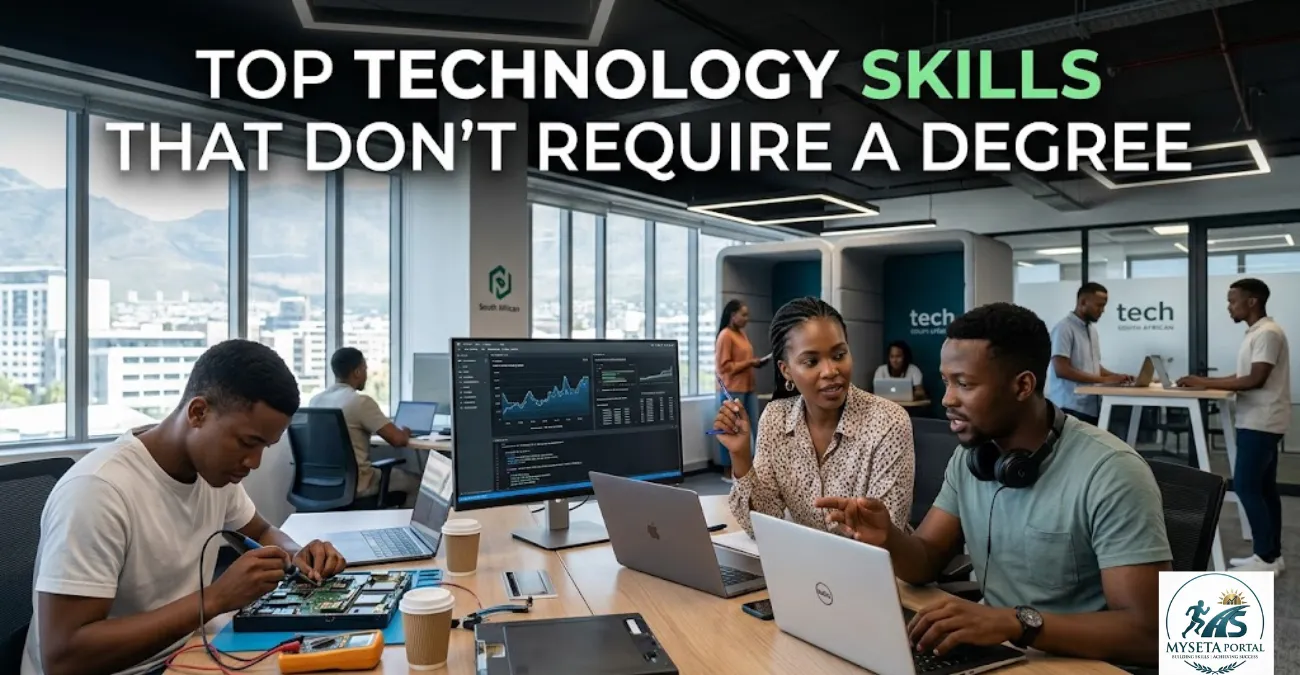
Not everyone has the opportunity to attend university, but that doesn’t mean you can’t build a successful career in technology.
In today’s digital economy, many employers are prioritising practical skills, certifications, portfolios, and hands-on experience over formal qualifications. As businesses continue to digitise their operations, the demand for skilled tech professionals is growing across South Africa.
If you’re looking for a future-focused career path, here are some of the most valuable technology skills you can learn without earning a university degree.
Why Skills-Based Technology Careers Are Growing
The technology sector changes rapidly.
Many employers now focus on whether a candidate can solve real-world problems rather than where they studied. This has created opportunities for people who develop practical skills through short courses, learnerships, internships, bootcamps, and self-directed learning.
For young South Africans, this means there are multiple pathways into the digital economy.
1. IT Support and Technical Support
IT support specialists help individuals and organisations solve computer, software, and network issues.
Skills You Will Learn
- Computer troubleshooting
- Hardware maintenance
- Software installation
- Operating system support
- User assistance
Career Opportunities
- IT Support Technician
- Help Desk Agent
- Desktop Support Technician
- ICT Support Assistant
Why It Matters
Almost every organisation relies on technology, making technical support one of the most accessible entry points into the ICT industry.
2. Cybersecurity Fundamentals
Cybersecurity professionals help protect systems, networks, and data from digital threats.
Skills You Will Learn
- Security awareness
- Risk identification
- Network security basics
- Access control
- Security monitoring
Career Opportunities
- Security Operations Centre Analyst
- Junior Cybersecurity Technician
- Information Security Assistant
Why It Matters
Cyber threats continue to increase globally, creating demand for security-conscious professionals.
3. Web Development
Web developers create and maintain websites and web applications.
Skills You Will Learn
- HTML
- CSS
- JavaScript
- Website design principles
- Content management systems
Career Opportunities
- Junior Web Developer
- Front-End Developer
- Website Administrator
- Freelance Developer
Why It Matters
Businesses of all sizes need websites, creating ongoing opportunities for skilled developers.
4. Digital Marketing
Digital marketing combines technology, communication, and data analysis.
Skills You Will Learn
- Social media management
- Search Engine Optimisation (SEO)
- Content creation
- Email marketing
- Analytics
Career Opportunities
- Digital Marketing Assistant
- Social Media Coordinator
- SEO Specialist
- Content Marketer
Why It Matters
As more businesses move online, digital marketing skills continue to grow in value.
5. Laptop and Computer Repair
Repair technicians diagnose and fix hardware and software issues.
Skills You Will Learn
- Fault diagnostics
- Hardware replacement
- Operating system installation
- Data recovery
- Device maintenance
Career Opportunities
- Computer Technician
- Repair Specialist
- ICT Support Technician
- Independent Business Owner
Why It Matters
Every repaired device represents a cost-saving solution for customers and a revenue opportunity for technicians.
6. Cellphone Repair Technology
Smartphone repair remains one of the most practical technology skills for entrepreneurship.
Skills You Will Learn
- Screen replacements
- Battery repairs
- Device diagnostics
- Software troubleshooting
- Customer service
Career Opportunities
- Cellphone Repair Technician
- Workshop Assistant
- Mobile Device Specialist
- Repair Business Owner
Why It Matters
The increasing cost of smartphones means repair services remain in demand.
Related Opportunity
You may also explore:
- Cellphone and Laptop Repair Training Programme 2026 Opens for Phalaborwa Youth — Free Skills, Tools and Business Mentorship
- Is Cellphone Repair a Good Business in 2026? What South African Entrepreneurs Need to Know
- 5 Skills You Will Learn in a Laptop Repair Programme in South Africa
- How Much Can a Cellphone Repair Technician Earn in South Africa in 2026?
7. Data Analytics Fundamentals
Data analytics involves turning information into useful insights.
Skills You Will Learn
- Spreadsheet analysis
- Data visualisation
- Reporting
- Basic statistics
- Business intelligence tools
Career Opportunities
- Data Administrator
- Reporting Assistant
- Junior Data Analyst
- Operations Analyst
Why It Matters
Data-driven decision-making is becoming essential across industries.
Future Employability: Why These Skills Matter
Technology skills are among the most transferable skills in the modern economy.
Learning one of these disciplines can lead to opportunities in:
- Government departments
- Financial services
- Telecommunications
- Retail
- Healthcare
- Education
- Small business
Many professionals begin in entry-level roles and progress into management, specialist positions, or entrepreneurship.
Most importantly, these skills remain relevant because technology continues to shape how organisations operate.
Step-by-Step Guide to Building a Tech Career
Step 1: Choose a Skill Path
Select an area that matches your interests and strengths.
Step 2: Complete Skills Training
Explore:
- Learnerships
- Internships
- Short courses
- Skills programmes
- Industry certifications
Step 3: Build Practical Experience
Create projects, volunteer, freelance, or participate in workplace training.
Step 4: Develop a Portfolio
Show employers what you can do through real examples of your work.
Step 5: Continue Learning
Technology evolves constantly, making continuous learning essential.
Eligibility Breakdown
Most technology training programmes require:
- Grade 10, Grade 11, or Matric
- Basic computer literacy
- Problem-solving ability
- Willingness to learn
Requirements vary depending on the training provider and programme level.
Document Checklist
Before applying for training opportunities, prepare:
- Certified ID copy
- Updated CV
- Educational certificates
- Proof of residence
- Relevant certificates (if applicable)
Frequently Asked Questions (FAQs)
Can I work in technology without a degree?
Yes. Many technology careers focus on skills, certifications, experience, and demonstrated ability.
Which technology skill is easiest to learn?
IT support, digital marketing, and cellphone repair are often considered accessible starting points.
Which skill has the highest earning potential?
Cybersecurity, web development, and data analytics generally offer strong long-term earning potential.
Can I start a technology business?
Yes. Skills such as web development, digital marketing, laptop repair, and cellphone repair can support entrepreneurship.
Are technology careers growing in South Africa?
Yes. Digital transformation continues to create demand for technology professionals across multiple sectors.
Martine Smith’s Expert Insight
Many job seekers make the mistake of collecting certificates without building practical experience.
To improve your chances of success:
1. Focus on Real Skills
Employers often value demonstrated ability more than multiple certificates.
2. Create a Portfolio
Show examples of websites, repairs, marketing campaigns, or technical projects.
3. Build Professional Networks
Connect with mentors, training providers, and industry professionals.
4. Stay Curious
Technology changes quickly. Continuous learning is often the difference between average and exceptional career growth.
Grow Your Career with MySetaPortal
Unlock real opportunities that help you move from learning to earning. MySETA Portal connects South African youth with trusted and up-to-date career development opportunities designed to build skills and open doors.
Whether you are a matriculant, unemployed graduate, or someone looking to upskill, this platform helps you stay ahead with opportunities that matter.
What you can access:
- Career Guides
- SETA Guides
- SETAs
- Bursaries
- Learnerships
- Internships
- Training Programmes
- TVET Opportunities
- Government Vacancies
- Courses
- Apprenticeships
- Graduate Programme
Final Thoughts
A university degree is only one pathway into the technology sector. With the right training, practical experience, and commitment to learning, South Africans can build rewarding careers in some of the fastest-growing areas of the digital economy.
Explore skills programmes, internships, learnerships, and vocational training opportunities to begin building your future today.
For trusted career information and skills development updates, regularly visit Mysetaportal.co.za and verify opportunities through official providers.
Disclaimer
Mysetaportal.co.za is an independent information publisher that shares career guidance, learnerships, internships, bursaries, and skills development opportunities. The platform is not affiliated with any government department, employer, SETA, or recruitment agency. Always verify opportunity details with the relevant organisation before applying.

Martine Smith is the Founder and Managing Editor of MySETA Portal, he writes about SETA learnerships, internships, bursaries and youth employment opportunities in South Africa. His goal is to help young people access trusted career information and skills development programmes. Email: info@mysetaportal.co.za