
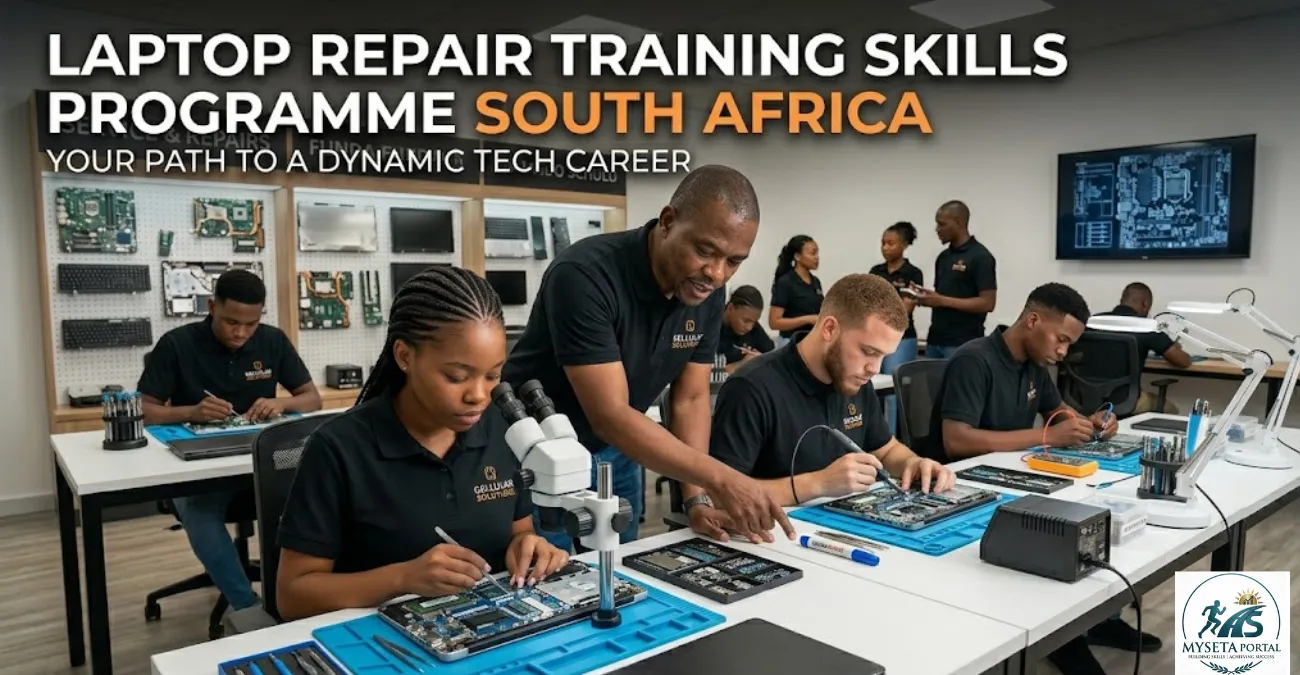
If you’re considering entering the tech repair industry, a laptop repair programme is one of the fastest ways to build practical, income-generating skills in South Africa’s growing digital economy.
With more people studying, working, and running businesses online, laptops have become essential tools. That means skilled repair technicians are in constant demand across repair shops, ICT companies, schools, and independent businesses.
Here are the five core skills you will develop during a professional laptop repair programme—and why they matter for your future career.
1. Laptop Hardware Diagnostics and Fault Finding
One of the first skills you’ll learn is how to identify hardware problems quickly and accurately.
This includes:
- Testing faulty laptops that won’t switch on
- Identifying motherboard failures
- Diagnosing screen, keyboard, and power issues
- Using diagnostic tools and multimeters
This skill is critical because it saves time, reduces incorrect repairs, and builds customer trust.
2. Component-Level Repair and Replacement
A strong laptop repair programme will teach you how to safely replace and repair internal components.
You will work with:
- RAM upgrades
- Hard drives and SSD replacements
- Laptop screens and hinges
- Batteries and charging ports
This is one of the most employable skills because it allows technicians to handle high-volume repair work in retail or workshop environments.
3. Operating System Installation and Software Troubleshooting
Modern laptop repair is not just hardware—it also includes software expertise.
You will learn how to:
- Install and configure Windows and Linux systems
- Fix boot errors and system crashes
- Remove viruses and malware
- Recover lost or corrupted data
- Update drivers and system firmware
This skill is especially valuable because many laptop issues are software-related, not hardware faults.
4. Advanced Electronics and Circuit Understanding
At a more advanced level, learners are introduced to basic electronics principles and circuit behaviour.
You may cover:
- Understanding motherboard layouts
- Voltage testing and current flow basics
- Identifying short circuits
- Introduction to soldering and rework techniques
This is the foundation for high-income repair skills such as motherboard-level repairs and advanced diagnostics.
5. Customer Service and Technical Communication
Technical ability alone is not enough. Successful technicians must also communicate clearly with customers.
You will learn how to:
- Explain technical faults in simple language
- Provide repair quotes and turnaround times
- Handle customer complaints professionally
- Build trust and repeat business
This soft skill often determines whether a technician becomes employed—or builds a successful independent repair business.
Future Employability: Why This Training Matters
A laptop repair programme is more than just technical training—it is a direct entry point into South Africa’s ICT and electronics sector.
With digital learning and remote work expanding, laptop repair skills are becoming increasingly valuable in:
- ICT support companies
- Electronics repair shops
- Retail technology stores
- School and college IT departments
- Independent repair businesses
Many learners eventually progress into roles such as ICT support technician, electronics specialist, or small business owner.
Step-by-Step: How to Start a Laptop Repair Career
Step 1: Enrol in a Training Programme
Look for accredited or skills-based programmes, including SETA-aligned training providers where available.
Step 2: Practice Hands-On Repairs
Focus on real devices—not just theory. Practical exposure is essential.
Step 3: Build a Skills Portfolio
Document repairs, upgrades, and diagnostics you complete during training.
Step 4: Apply for Experience Opportunities
Look for internships, learnerships, or entry-level technician roles.
Related Opportunity
You may also explore:
Eligibility Breakdown
Most laptop repair programmes require:
- Minimum Grade 10 to Matric (varies by provider)
- Basic interest in computers and electronics
- Problem-solving ability
- Attention to detail
No university degree is required to start.
Document Checklist
Prepare the following before applying:
- Certified ID copy
- Updated CV
- Latest school results or Matric certificate
- Proof of residence
- Any technical certificates (if available)
FAQs
Do I need experience to study laptop repair?
No. Most programmes are designed for beginners.
Can I get a job after completing training?
Yes. Entry-level technician roles and internships are commonly available.
Is laptop repair a good career in South Africa?
Yes. Demand is growing due to increased reliance on digital devices for work and education.
Can I start my own business?
Yes. Many technicians become self-employed after gaining experience.
Martine Smith’s Expert Insight
Many learners underestimate how competitive the repair industry has become. Completing training alone is not enough.
Here’s how to stand out:
1. Focus on Speed + Accuracy
Employers value technicians who can diagnose faults quickly without guessing.
2. Build Real Experience Early
Even repairing personal or donated devices adds credibility to your CV.
3. Learn Both Hardware and Software
Technicians who only focus on one area earn less and have fewer job opportunities.
4. Develop Professional Communication
Clear explanations to customers often lead to repeat business and referrals.
How to Apply
Grow Your Career with MySetaPortal
Unlock real opportunities that help you move from learning to earning. MySETA Portal connects South African youth with trusted and up-to-date career development opportunities designed to build skills and open doors.
Whether you are a matriculant, unemployed graduate, or someone looking to upskill, this platform helps you stay ahead with opportunities that matter.
What you can access:
- Career Guides
- SETA Guides
- SETAs
- Bursaries
- Learnerships
- Internships
- Training Programmes
- TVET Opportunities
- Government Vacancies
- Courses
- Apprenticeships
- Graduate Programme
Final Thoughts
A laptop repair programme is one of the most practical entry points into South Africa’s growing tech support and electronics industry. It equips you with real-world skills that can lead to employment, entrepreneurship, and long-term financial independence.
To explore more learnerships, internships, and skills programmes, always verify opportunities through trusted sources and stay updated via Mysetaportal.co.za.
Disclaimer
Mysetaportal.co.za is an independent information platform that shares career opportunities, learnerships, internships, and skills development content. It is not affiliated with any government department, SETA, or official recruitment body. Always verify opportunities with the official issuing organisation before applying.

Martine Smith is the Founder and Managing Editor of MySETA Portal, he writes about SETA learnerships, internships, bursaries and youth employment opportunities in South Africa. His goal is to help young people access trusted career information and skills development programmes. Email: info@mysetaportal.co.za