
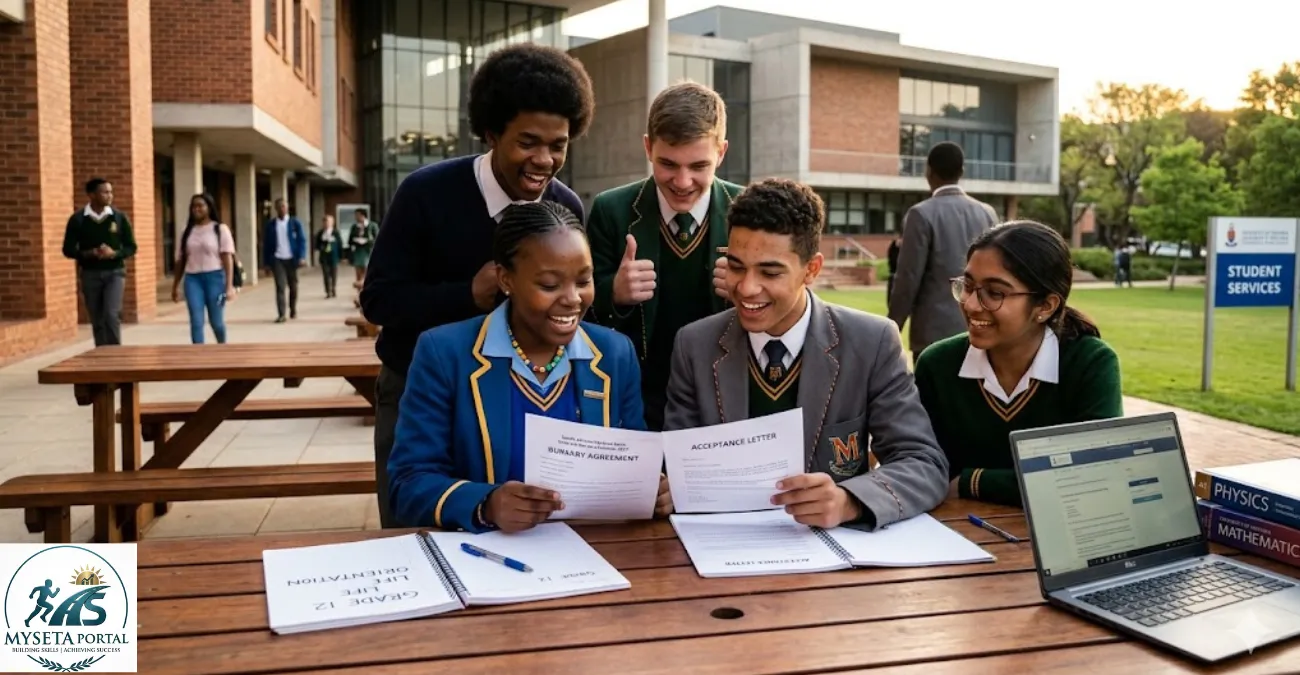
For many South African learners, receiving a university acceptance letter marks the beginning of an exciting new chapter. Unfortunately, financial barriers often stand between talented students and their dreams of obtaining a higher education qualification.
To help address this challenge, the South African Reserve Bank (SARB) has opened applications for its External Bursary Scheme for 2027 undergraduate studies. The programme is designed to assist academically strong learners from financially disadvantaged backgrounds who require funding to pursue university education.
The bursary reflects SARB’s commitment to developing South Africa’s future workforce by investing in talented young people who have the potential to contribute to the country’s economic growth and skills development.
Quick Overview
| Bursary Information | Details |
|---|---|
| Programme | SARB External Bursary Scheme 2027 |
| Organisation | South African Reserve Bank |
| Study Level | Undergraduate Degree |
| Location | South Africa |
| Closing Date | 30 September 2026 |
| Academic Requirement | Minimum 70% average in June Grade 12 examinations |
| Age Requirement | Younger than 30 years |
| Financial Requirement | Must demonstrate financial need |
| Application Methods | Online, Email, Post |
| Promo Code | SARBEXT2027 |
About the South African Reserve Bank Bursary Programme
The South African Reserve Bank plays a critical role in maintaining monetary and financial stability in South Africa. Through its bursary programme, SARB seeks to develop future professionals who can contribute to the country’s economic and financial sectors.
The bursary is aimed at supporting students who demonstrate strong academic potential but may not have the financial resources needed to attend university.
By investing in education, SARB helps strengthen South Africa’s skills pipeline and supports the development of future leaders across multiple professional disciplines.
Why This Bursary Matters
Many high-achieving learners face the difficult reality of being accepted into university but lacking the financial resources to register and continue their studies.
University expenses often include:
- Tuition fees
- Registration fees
- Accommodation
- Textbooks
- Learning materials
- Living expenses
The SARB External Bursary Scheme helps deserving students overcome these financial barriers and focus on achieving academic success.
Future Employability: How This Bursary Can Shape Your Career
The South African Reserve Bank supports qualifications that align with its functions and broader economic development objectives.
Students who pursue relevant qualifications may develop skills that are valuable in sectors such as:
- Banking
- Financial Services
- Economics
- Data Analytics
- Risk Management
- Information Technology
- Public Policy
- Financial Regulation
These industries continue to offer strong long-term career prospects for graduates with relevant qualifications and skills.
Fields of Study Supported
According to the bursary information, successful applicants should pursue studies that relate to the functions and activities of the South African Reserve Bank.
Examples of relevant fields include:
Finance and Commerce
- Accounting
- Finance
- Financial Management
- Banking
- Business Management
- Commerce Degrees
Economics and Quantitative Sciences
- Economics
- Statistics
- Mathematics
- Actuarial Science
Technology and Data
- Information Technology
- Data Science
Legal and Risk Fields
- Law
- Risk Management
Students pursuing other qualifications that support the broader objectives of the Reserve Bank may also be considered.
Related Opportunity
You may also explore
- Schauenburg Education Trust Bursary Programme 2027 Applications Open for South African Engineering and Business students
- Department of Agriculture Bursary 2027 Opens Applications – Fully Funded Support for Future Agricultural Professionals
Eligibility Requirements
Applicants must satisfy all of the following requirements.
Academic Requirements
Applicants must:
- Achieve an average of at least 70% in the June Grade 12 examinations
- Maintain strong academic performance throughout Matric
University Admission Requirement
Applicants must:
- Have provisional acceptance into an undergraduate degree programme at a recognised South African university
Age Requirement
Applicants must:
- Be younger than 30 years old
Financial Need Requirement
Applicants must:
- Demonstrate financial need
- Show that bursary funding is necessary to pursue university studies
Meeting the minimum requirements does not guarantee selection, as bursary opportunities are highly competitive.
Required Supporting Documents
Before applying, prepare the following documents:
Mandatory Documents
- Certified copy of South African ID
- June Grade 12 results
- Proof of provisional university acceptance
- Student number from the institution
Additional Documents
- Academic records (where applicable)
- Proof of household income
- Any additional documents requested during the application process
Incomplete applications may not be considered.
Step-by-Step Application Guide
The South African Reserve Bank has provided three application methods.
Option 1: Apply Online
Complete the application through the official bursary application portal.
Remember to use the promo code:
SARBEXT2027
Option 2: Apply by Email
Submit your application and supporting documents to the designated bursary email address provided by the programme administrators.
Remember to include:
- Completed application
- Supporting documents
- Promo code where required
Send your application and supporting documents to: sarbbursary@ttibursaries.co.za
Option 3: Apply by Post
Applications may also be submitted by post to the address provided by the bursary administrators.
Submit applications to:
Dimpho Nkoana
POSTNET Suite 101
Private Bag X153
Bryanston
2021
Allow sufficient time for delivery before the closing date.
Closing Date
Applications close on:
30 September 2026
Late applications are unlikely to be considered.
What Happens After Applying?
The selection process may include:
Application Screening
Applications are reviewed to confirm eligibility and completeness.
Shortlisting
Eligible candidates are shortlisted based on academic performance and financial need.
Interviews
Shortlisted applicants may be invited to attend interviews.
Assessment Process
Additional assessments may be conducted where necessary.
Final Selection
Successful candidates will receive notification from the bursary administrators.
Bursary Agreement
Selected students will be required to sign a formal bursary agreement outlining the terms and conditions of funding.
How to Improve Your Chances of Selection
Competition for major bursaries is often intense. Consider the following tips:
Focus on Academic Performance
Strong academic results remain one of the most important selection factors.
Apply Early
Submitting your application early reduces the risk of missing deadlines or experiencing technical issues.
Submit Complete Documentation
Ensure every required document is included and clearly certified where necessary.
Demonstrate Financial Need Clearly
Provide accurate information regarding household income and financial circumstances.
Choose a Relevant Qualification
Fields that align with SARB’s mandate and South Africa’s economic development priorities may strengthen your application.
Frequently Asked Questions (FAQs)
Who can apply for the SARB External Bursary?
South African learners who have provisional university acceptance, meet the academic requirements, demonstrate financial need, and are younger than 30 years old.
What academic average is required?
Applicants must achieve a minimum average of 70% in their June Grade 12 examinations.
Is university acceptance required?
Yes. Applicants must provide proof of provisional acceptance at a recognised South African university.
Is financial need considered?
Yes. Financial need is a key requirement for the bursary.
Can applicants older than 30 apply?
No. Applicants must be younger than 30 years of age.
What is the closing date?
Applications close on 30 September 2026.
Martine Smith’s Expert Insight
The SARB External Bursary Scheme is one of the most competitive funding opportunities available to South African learners. Here are four practical ways to improve your application:
1. Secure University Acceptance Early
Do not wait until the last minute to apply to universities. Having your acceptance documentation ready can prevent delays.
2. Organise Your Financial Documents
Many applicants lose opportunities because they fail to provide complete proof of household income and financial circumstances.
3. Maintain Strong Academic Results
Your final Matric performance remains important even after submitting your application.
4. Keep Copies of Everything
Save digital and physical copies of all submitted documents, emails, and application confirmations.
Grow Your Career with MySETA Portal
Unlock real opportunities that help you move from learning to earning. MySETA Portal connects South African youth with trusted and up-to-date career development opportunities designed to build skills and open doors.
Whether you are a matriculant, unemployed graduate, or someone looking to upskill, this platform helps you stay ahead with opportunities that matter.
What you can access:
- Career Guides
- SETA Guides
- SETAs
- Bursaries
- Learnerships
- Internships
- Training Programmes
- TVET Opportunities
- Government Vacancies
- Courses
- Apprenticeships
Final Thoughts
The South African Reserve Bank External Bursary Scheme 2027 represents a valuable opportunity for academically strong learners who need financial assistance to pursue university studies.
If you have achieved at least 70% in your June Grade 12 examinations, received provisional university acceptance, and can demonstrate financial need, this bursary could provide the support needed to achieve your educational and career goals.
Start preparing your documents now and submit your application well before the 30 September 2026 deadline.
Disclaimer
Mysetaportal.co.za is an independent information publisher and is not affiliated with, endorsed by, or acting on behalf of the South African Reserve Bank, any university, government department, or bursary administrator. Applicants should always verify application requirements, deadlines, and official information directly with the bursary provider before applying

Martine Smith is the Founder and Managing Editor of MY SETA portal, he writes about SETA learnerships, internships, bursaries and youth employment opportunities in South Africa. His goal is to help young people access trusted career information and skills development programmes. Email: info@mysetaportal.co.za