
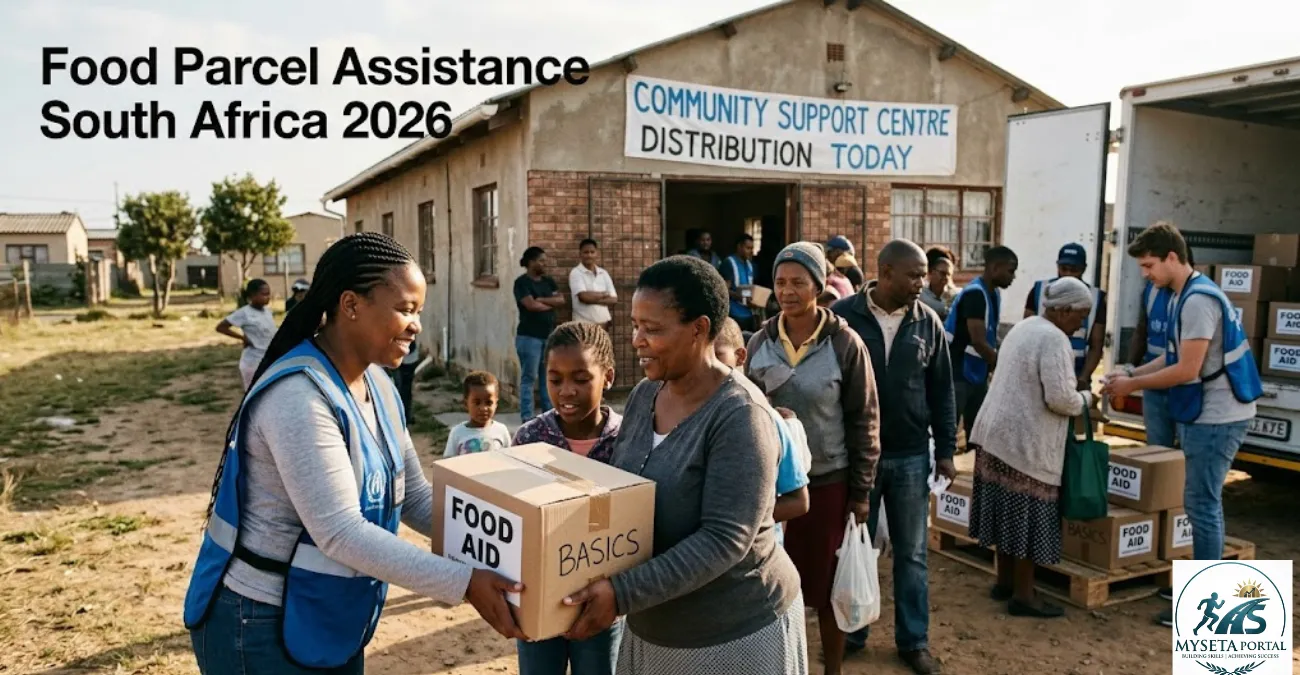
How to Apply for Food Parcels in South Africa
Food insecurity remains a major challenge for many South African households. Rising living costs, unemployment, and financial hardship have left many families struggling to afford basic necessities.
If you are facing financial difficulties and cannot afford food, you may qualify for emergency food assistance through government departments, municipalities, churches, NGOs, and community organisations.
This guide explains how food parcel assistance works in South Africa, who may qualify, where to apply, and how to avoid common scams.
Opportunity Overview
Type of Assistance
Emergency Food Parcel Assistance
Available Through
- Municipalities
- Provincial Departments of Social Development
- Churches and Faith-Based Organisations
- NGOs
- Community Organisations
- Disaster Relief Programmes
Application Cost
Free
Who May Qualify
- Unemployed individuals
- Vulnerable households
- Elderly persons without support
- Child-headed households
- Persons with disabilities facing hardship
- Families affected by disasters
- Households experiencing financial distress
Important Warning About SASSA Food Parcel Applications
Many South Africans encounter social media posts claiming that “SASSA Food Parcel Applications Are Open.”
In most cases, these claims are false.
There is currently no permanent nationwide online SASSA food parcel application programme where members of the public can register online for monthly food parcels.
Scammers often use:
- Fake Facebook pages
- WhatsApp messages
- TikTok videos
- Fraudulent websites
Their goal is often to collect personal information, banking details, or generate website traffic.
Never:
- Pay money to apply
- Share banking details
- Provide OTP codes
- Download suspicious applications
- Click unknown links
Legitimate food assistance programmes do not require payment.
Who Provides Food Parcels in South Africa?
Municipalities
Many municipalities offer emergency relief services to vulnerable residents.
Support may include:
- Food parcels
- Food vouchers
- Temporary relief assistance
- Referrals to support organisations
Provincial Departments of Social Development
Provincial social development departments assist individuals and families experiencing hardship.
Services may include:
- Social Relief of Distress
- Emergency food assistance
- Disaster relief support
- Community support programmes
Churches and Faith-Based Organisations
Many churches provide food support regardless of religious affiliation.
Examples include:
- Church outreach programmes
- Food banks
- Community feeding schemes
- Emergency relief initiatives
Non-Governmental Organisations (NGOs)
Various NGOs assist communities through:
- Food parcel distribution
- Feeding programmes
- Community food banks
- Disaster response initiatives
Community-Based Organisations
Local organisations may offer:
- Food parcels
- Soup kitchens
- Food gardens
- Nutritional support programmes
Eligibility Requirements
Requirements vary depending on the organisation.
Priority is generally given to:
- Unemployed persons
- Families with little or no income
- Elderly individuals living alone
- Child-headed households
- Persons with disabilities
- Families affected by disasters
- Vulnerable women and children
- Households awaiting grant approval
Approval is usually based on an assessment of need and available resources.
Related Opportunity
You may also explore
Required Documents Checklist
Depending on the organisation, you may need:
- South African ID document
- Proof of residence
- Proof of unemployment
- SASSA grant documents (if applicable)
- Birth certificates of dependent children
- Affidavit confirming financial hardship
Not all organisations require every document.
Step-by-Step Application Process
Step 1: Visit Your Nearest Department of Social Development Office
Officials can:
- Assess your situation
- Explain available assistance programmes
- Refer you to local food support initiatives
Step 2: Contact Your Municipality
Ask whether your municipality offers:
- Food parcel programmes
- Emergency relief services
- Community support programmes
Step 3: Speak to a Social Worker
A social worker may:
- Assess your household circumstances
- Verify your financial situation
- Recommend assistance programmes
Step 4: Contact Local Churches and NGOs
Many community organisations provide food support more quickly than formal government programmes.
Ask about:
- Food parcels
- Food vouchers
- Feeding schemes
- Community kitchens
Step 5: Monitor Community Announcements
Food assistance opportunities are often advertised through:
- Community halls
- Clinics
- Libraries
- Municipal offices
- Local radio stations
- Community Facebook groups
What Is Social Relief of Distress (SRD)?
Many people confuse food parcels with Social Relief of Distress.
Social Relief of Distress is temporary assistance provided to individuals and families experiencing extreme hardship.
Support may include:
- Food parcels
- Food vouchers
- Temporary material assistance
Applications are assessed individually based on need.
Warning Signs of Food Parcel Scams
Requests for Payment
Legitimate food assistance programmes are free.
Fake Government Pages
Always verify information through official government channels.
Guaranteed Approval Claims
Be cautious of messages stating:
- “Apply before midnight”
- “Limited food parcel slots available”
- “Guaranteed approval”
Requests for Banking Information
Food parcel applications generally do not require banking details.
Suspicious Websites
Avoid websites that promise instant approval without assessments.
Alternative Sources of Food Support
If food parcel assistance is unavailable, consider:
- Community soup kitchens
- School nutrition programmes
- Food banks
- Church feeding schemes
- Community food gardens
- NGO support programmes
Why Seeking Help Early Matters
Many families wait until they have completely run out of food before seeking assistance.
If you are experiencing financial hardship:
- Contact support services early
- Speak with community organisations
- Request assistance from social workers
- Explore available support programmes
Early intervention may prevent a financial crisis from becoming worse.
Frequently Asked Questions (FAQ)
Does SASSA offer food parcels?
There is no permanent nationwide online SASSA food parcel application programme. Be cautious of scams claiming otherwise.
Can unemployed people apply for food parcels?
Yes. Many food assistance programmes prioritise unemployed and vulnerable households.
Do I need to pay to apply?
No. Legitimate food assistance programmes are free.
Where can I apply?
You can apply through municipalities, social development offices, churches, NGOs, and community organisations.
How long does approval take?
Approval times vary depending on the organisation, assessments, and available resources.
Expert Guidance from Martine Smith
Food assistance programmes exist to support individuals and families facing genuine hardship. If you need help, start with trusted organisations such as your local Department of Social Development office, municipality, church, or registered NGO.
Never provide personal information to unofficial websites or social media pages promising guaranteed food parcels. Always verify information through recognised government or community channels. Remember that legitimate food assistance programmes do not charge application fees.
Grow Your Career with MySETA Portal
Unlock real opportunities that help you move from learning to earning. MySETA Portal connects South African youth with trusted and up-to-date career development opportunities designed to build skills and open doors.
Whether you are a matriculant, unemployed graduate, or someone looking to upskill, this platform helps you stay ahead with opportunities that matter.
What you can access:
- Career Guides
- SETA Guides
- SETAs
- Bursaries
- Learnerships
- Internships
- Training Programmes
- TVET Opportunities
- Government Vacancies
- Courses
- Apprenticeships
Professional Disclaimer
Advice & Insights by Martine Smith, Founder and Managing Editor of MySETA Portal

MySETA Portal is an independent information platform and is not affiliated with any SETA, government department, or public institution.
While we strive to publish accurate and up-to-date information, readers should always verify opportunities, requirements, and deadlines through official SETA, DHET, employer, or government websites before applying.
The content published on MySETA Portal is provided for informational purposes only and should not be considered legal, financial, educational, or professional career advice. Readers are encouraged to seek qualified professional guidance where appropriate.

Martine Smith is the Founder and Managing Editor of MySETA Portal, he writes about SETA learnerships, internships, bursaries and youth employment opportunities in South Africa. His goal is to help young people access trusted career information and skills development programmes. Email: info@mysetaportal.co.za