
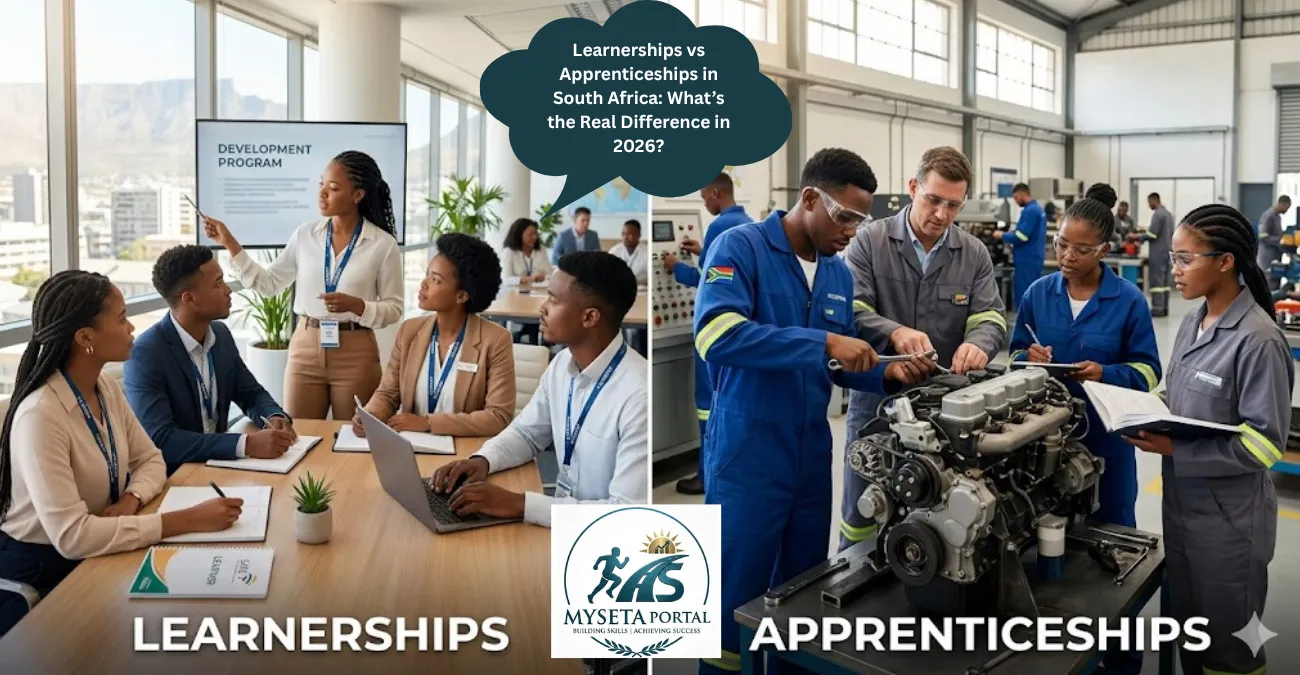
Many young South Africans searching for career opportunities often see the words learnership and apprenticeship used online — and sometimes they sound like the same thing.
But they are actually quite different.
Understanding the difference can help you choose the right path for your future, especially if you are a matriculant, TVET student, graduate, or unemployed youth trying to enter the job market.
Both options help you gain practical workplace experience, earn a monthly stipend, and improve your employability. But the type of training, industries, and long-term career outcomes are not the same.
What You Need to Know Quickly
Learnerships:
- Combine theory + workplace experience
- Available in many industries
- Often easier to access
- Good for entry-level careers
- Usually linked to SETAs and NQF qualifications
Apprenticeships:
- Focus mainly on technical trades
- Longer and more hands-on
- Ideal for artisan careers
- Often include trade testing
- Common in engineering and construction fields
Both can lead to permanent employment opportunities in South Africa.
Why These Opportunities Matter in 2026
Youth unemployment remains one of South Africa’s biggest challenges.
Many employers want experience — but young people need opportunities first to gain that experience.
That’s why learnerships and apprenticeships remain extremely important. They allow young people to:
- earn while learning
- build practical skills
- gain workplace exposure
- improve their CVs
- enter industries with real demand
For many South Africans, these programmes become the first step into long-term careers.
What Is a Learnership?
A learnership is a structured training programme that combines:
- classroom learning
- practical workplace experience
Most learnerships are managed through SETAs (Sector Education and Training Authorities).
They usually lead to an NQF qualification registered on the National Qualifications Framework.
Popular Learnership Fields
Learnerships are available across many sectors, including:
- Business administration
- Retail
- Banking
- IT support
- Hospitality
- Customer service
- Call centres
- Public administration
- Wholesale and logistics
Because of this variety, learnerships are often more accessible for beginners.
What Is an Apprenticeship?
An apprenticeship is more specialised and focuses mainly on skilled trades.
It combines:
- technical training
- extensive practical work
- trade preparation
Apprenticeships are designed to produce qualified artisans.
Popular Apprenticeship Trades
Examples include:
- Electrician
- Plumber
- Welder
- Millwright
- Boilermaker
- Motor mechanic
- Fitter and turner
These careers are highly practical and usually involve physical work environments.
Main Difference Between Learnerships and Apprenticeships
Training Style
Learnerships:
Balanced mix of theory and workplace learning.
Apprenticeships:
Much heavier focus on technical practical training.
Industry Focus
Learnerships:
Office, retail, service, and business sectors.
Apprenticeships:
Engineering, manufacturing, construction, and skilled trades.
Duration
Learnerships:
Usually around 12 months.
Apprenticeships:
Can take 2–4 years depending on the trade.
Qualifications
Learnerships:
Lead to an NQF qualification.
Apprenticeships:
Often lead to trade certification and artisan status.
Stipends
Both usually provide stipends.
However:
- apprenticeships in technical sectors may sometimes pay higher amounts
- stipend levels depend on industry and employer funding
Who Should Choose a Learnership?
A learnership may suit you if:
- you want office-based careers
- you enjoy communication and administration
- you are interested in business or retail
- you want quicker entry-level experience
- you prefer less physically demanding work
Learnerships are often ideal for:
- matriculants
- first-time job seekers
- unemployed youth
- entry-level applicants
Who Should Choose an Apprenticeship?
An apprenticeship may suit you if:
- you enjoy practical technical work
- you like working with tools or machinery
- you are interested in engineering or construction
- you want to become an artisan
- you prefer hands-on learning
Technical trades remain highly valuable in South Africa and internationally.
Benefits of Both Programmes
Whether you choose a learnership or apprenticeship, both offer major career advantages.
Workplace Experience
You gain practical exposure employers value.
Monthly Stipends
Many programmes help learners financially during training.
Better Employment Opportunities
Experience improves future job prospects.
Professional Skills
You learn teamwork, communication, discipline, and workplace behaviour.
Industry Connections
Networking opportunities can lead to future employment.
Documents Usually Needed
Applications often require:
- Certified ID copy
- Matric certificate
- Updated CV
- Proof of address
- Relevant qualifications (if applicable)
Some technical apprenticeships may also require:
- Maths and Science subjects
- TVET qualifications
Common Mistakes Young Applicants Make
Applying Without Understanding the Programme
Many applicants apply randomly without knowing what the work involves.
Research first.
Ignoring Requirements
Technical apprenticeships often have stricter subject requirements.
Choosing Based Only on Stipend
Higher-paying programmes are attractive, but long-term career fit matters more.
Expert Insight from Martine Smith
One of the biggest mistakes young people make is following trends instead of choosing careers that match their strengths.
Important advice:
- Choose a field you can realistically grow in
- Understand the daily work involved
- Research career opportunities after completion
- Focus on long-term employability, not only short-term income
Both learnerships and apprenticeships can create successful careers when approached seriously.
Which Option Has Better Career Growth?
Both can lead to stable careers — but in different ways.
Learnerships may lead to:
- office jobs
- administration careers
- customer service roles
- business support positions
Apprenticeships may lead to:
- artisan careers
- technical specialist roles
- engineering support positions
- self-employment opportunities
South Africa continues to need both skilled office workers and qualified artisans.
Grow Your Career with MYSETAportal
Unlock real opportunities that help you move from learning to earning. MYSETAportal connects South African youth with trusted and up-to-date career development opportunities designed to build skills and open doors.
Whether you are a matriculant, unemployed graduate, or someone looking to upskill, this platform helps you stay ahead with opportunities that matter.
What you can access:
Final Encouragement
There is no “better” option for everyone.
The best choice depends on:
- your interests
- your strengths
- your career goals
- the type of work environment you enjoy
What matters most is gaining skills, experience, and professional exposure.
Whether you choose a learnership or apprenticeship, both can help you move closer to financial independence and long-term career growth.
Your future career starts with one opportunity and the willingness to learn
Disclaimer
Always verify opportunities from official providers before applying.

Martine Smith is the Founder and Managing Editor of MY SETA portal, he writes about SETA learnerships, internships, bursaries and youth employment opportunities in South Africa. His goal is to help young people access trusted career information and skills development programmes. Email: info@mysetaportal.co.za