
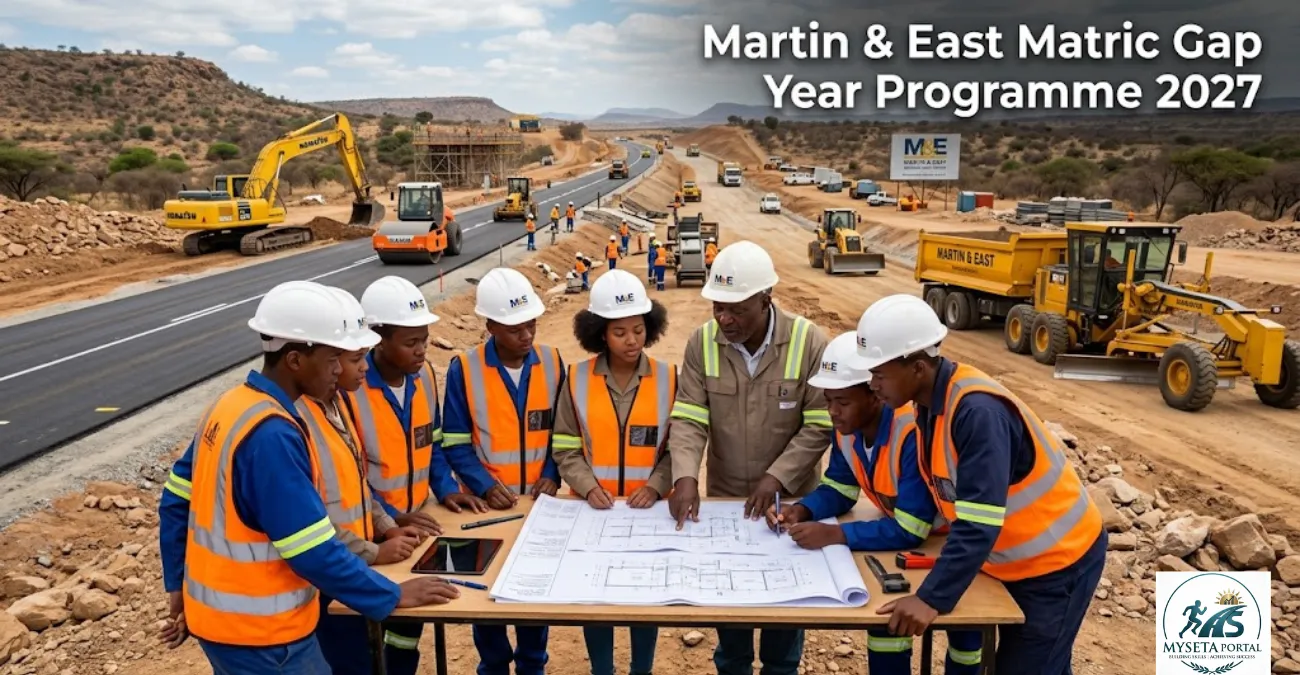
Choosing what to do after matric can be overwhelming, especially if you are passionate about engineering but want real-world experience before entering university. The Martin & East Matric Gap Year Programme 2027 offers South African Grade 12 learners a unique opportunity to earn a salary, gain practical construction industry experience, and potentially secure bursary funding for future Civil Engineering studies.
Unlike a traditional gap year, this programme combines workplace exposure, structured learning, and career development, helping learners build a strong foundation before beginning tertiary studies in 2028.
Programme Overview
Quick Facts
Programme: Martin & East Matric Gap Year Programme 2027
Company: Martin & East
Location: South Africa
Application Closing Date: 30 October 2026
Programme Type: Paid Gap Year Programme with Learnership Component
Key Benefits
- Earn a salary during the Gap Year
- Gain practical construction industry experience
- Participate in a Construction Roadworks and Supervision Learnership
- Opportunity to compete for bursary funding
- Exposure to major civil engineering projects
- Build professional networks before university
Why This Gap Year Programme Stands Out
Many learners enter university without fully understanding what Civil Engineers do in the workplace.
This programme bridges the gap between school and university by allowing participants to experience real engineering environments before beginning formal studies.
Successful candidates spend a year:
- Learning from experienced construction professionals
- Participating in practical workplace activities
- Understanding engineering principles in action
- Building professional skills
- Developing industry contacts
- Earning an income
By the time participants begin university, they already possess valuable industry exposure that many engineering graduates only acquire later in their careers.
Areas of Exposure During the Programme
Road Construction and Rehabilitation
Participants may gain insight into:
- Road foundations
- Pavement construction
- Site preparation
- Construction materials
- Quality control procedures
Bulk Earthworks and Landfills
Learners may observe and assist with:
- Excavation projects
- Soil compaction
- Land preparation
- Landfill development activities
Pipelines and Underground Services
Exposure may include:
- Water infrastructure
- Sewer systems
- Underground utilities
- Installation processes
Bridges and Concrete Structures
Participants may gain experience related to:
- Bridge construction
- Reinforced concrete structures
- Structural inspections
- Engineering supervision
Road Surfacing and Maintenance
Learners may observe:
- Asphalt surfacing
- Road rehabilitation projects
- Maintenance planning
- Quality assurance procedures
Trenchless Engineering Solutions
Participants may gain insight into modern engineering technologies used to install infrastructure while minimising surface disruption.
Housing and Community Infrastructure
Exposure may include projects that support community development and housing infrastructure.
Environmental Protection and Gabions
Learners may observe engineering solutions designed to reduce erosion and protect infrastructure assets.
Crushing and Screening Operations
Participants may learn about:
- Aggregate production
- Material processing
- Construction material quality control
Construction Roadworks and Supervision Learnership
One of the most valuable aspects of this programme is placement on a Construction Roadworks and Supervision Learnership.
Rather than simply observing workplace activities, learners receive structured industry training designed to develop practical construction knowledge and supervisory skills.
This additional qualification can significantly strengthen a participant’s CV and future employability.
Eligibility Requirements
Academic Requirements
Applicants must:
- Be in Grade 12 during 2026
- Intend to study Civil Engineering in 2028
- Achieve at least 60% in:
- Pure Mathematics, OR
- Mathematics Literacy, OR
- Technical Mathematics
- Achieve at least 60% in Physical Science
Citizenship Requirements
Applicants must:
- Be South African citizens
Related Opportunity
You may also explore:
Future Employability: Why This Opportunity Matters
South Africa continues to invest heavily in infrastructure development, transportation networks, housing projects, water systems, and public works.
As a result, Civil Engineering remains one of the country’s most important technical professions.
The practical experience gained during this programme can help participants develop:
- Construction site awareness
- Engineering problem-solving skills
- Project coordination experience
- Workplace professionalism
- Safety and compliance knowledge
- Team collaboration skills
These competencies are highly valued by employers across construction, consulting engineering, municipal infrastructure, transportation, mining, and public sector projects.
Students entering university after completing this programme often possess a clearer understanding of industry expectations and practical engineering applications.
Bursary Opportunities After the Gap Year
A major attraction of the programme is the possibility of receiving bursary support after successful completion.
Bursary awards are typically based on:
- Performance during the Gap Year
- Acceptance into an approved tertiary institution
- Internal selection processes
Strong performers may receive financial assistance to pursue Civil Engineering qualifications.
Potential Sponsored Institutions
Students accepted into approved programmes at the following institutions may be considered:
- University of Cape Town
- Stellenbosch University
- University of Pretoria
- Cape Peninsula University of Technology
- Nelson Mandela University
Potential Funded Qualifications
- Bachelor of Engineering (Civil)
- Bachelor of Science in Engineering (Civil)
- Bachelor of Engineering Technology (Civil)
- Diploma in Civil Engineering
Step-by-Step Application Guide
Step 1: Prepare Your CV
Create a professional CV highlighting:
- Academic achievements
- Mathematics and Science performance
- Leadership activities
- Extracurricular participation
Step 2: Gather Supporting Documents
Ensure all required documents are ready before applying.
Step 3: Prepare Your June 2026 Results
Applicants must submit their June Grade 12 results as part of the application process.
Step 4: Submit Your Application
Email your documents using the correct subject line.
Subject Line: Scholar Recruitment 2027
Email Address: careers@megroup.co.za
Step 5: Apply Early
Do not wait until the final week before the deadline. Early applications often avoid technical or administrative delays.
Documents Checklist
Prepare the following:
- Updated CV
- Certified copy of South African ID
- June 2026 Grade 12 report
- Academic achievement certificates
- Leadership certificates (if available)
- Community involvement certificates (if available)
- Additional supporting documents
Martine Smith’s Expert Insight
Many strong candidates miss opportunities because they focus only on marks and ignore the broader application.
1. Highlight Leadership Experience
Construction and engineering projects rely heavily on teamwork and leadership. Include prefect roles, team captain positions, or leadership programmes.
2. Showcase Practical Interest in Engineering
Mention science projects, technical hobbies, robotics clubs, design competitions, or engineering-related activities.
3. Present a Professional CV
Keep your CV clean, organised, and easy to read. Recruiters often spend only a few minutes reviewing applications.
4. Demonstrate Long-Term Commitment
Make it clear that Civil Engineering is your intended career path. Programmes like this seek candidates who are serious about building careers in the sector.
Asked Questions (FAQs)
Who can apply?
Current Grade 12 learners in 2026 who are South African citizens and intend to study Civil Engineering in 2028.
Is the programme paid?
Yes. Successful candidates will earn a salary during the Gap Year.
What engineering field does the programme target?
The programme focuses specifically on Civil Engineering.
What marks are required?
Applicants must achieve at least 60% in Mathematics (or Mathematics Literacy or Technical Mathematics) and Physical Science.
Will I automatically receive a bursary?
No. Bursaries are awarded based on performance, acceptance into approved institutions, and final selection outcomes.
When do applications close?
Applications close on 30 October 2026.
Where should applications be sent?
Applications must be emailed to careers@megroup.co.za using the subject line Scholar Recruitment 2027.
Grow Your Career with MySetaPortal
Unlock real opportunities that help you move from learning to earning. MySETA Portal connects South African youth with trusted and up-to-date career development opportunities designed to build skills and open doors.
Whether you are a matriculant, unemployed graduate, or someone looking to upskill, this platform helps you stay ahead with opportunities that matter.
What you can access:
- Career Guides
- SETA Guides
- SETAs
- Bursaries
- Learnerships
- Internships
- Training Programmes
- TVET Opportunities
- Government Vacancies
- Courses
- Apprenticeships
Final Thoughts
The Martin & East Matric Gap Year Programme 2027 is more than a gap year opportunity. It is a structured pathway that combines income, workplace experience, industry training, and potential bursary support for future Civil Engineering studies.
For Grade 12 learners who are serious about infrastructure development, construction, and engineering, this programme offers a practical head start that could shape an entire career.
To stay informed about bursaries, learnerships, internships, and engineering opportunities, regularly check Mysetaportal.co.za and submit your application well before the closing date.
Disclaimer
Mysetaportal.co.za is an independent information publisher that shares learnerships, internships, bursaries, scholarships, and career opportunities. The platform is not affiliated with, endorsed by, or acting on behalf of any government department, university, employer, SETA, or recruitment agency. Applicants should verify all programme information through official sources before applying

Martine Smith is the Founder and Managing Editor of MySETA Portal, he writes about SETA learnerships, internships, bursaries and youth employment opportunities in South Africa. His goal is to help young people access trusted career information and skills development programmes. Email: info@mysetaportal.co.za